
There aren’t many things in life as enjoyable as going on a good hike. The joy of being outside, mixed with the accomplishment of walking long distances, makes it something that’s easy to do and incredibly satisfying. Walking is always one of the best ways to incorporate exercise when you have a sedentary job, but it can easily become an experience you never want to relive – and it all comes down to your choice of clothing.
Today’s post will focus on what you should wear on a cold hike, but that’s mainly because it’s quite easy to know what to wear on a hot hike. When it’s warm and sunny, you naturally know to wear less clothing, bring sun protection, etc. Most people get it wrong when it comes to colder hikes in fall and winter, so here are the must-haves to put on your body.
Thermal Socks
Your feet are always the first things to feel the chill on a hike, which is strange considering they’re constantly moving. Nevertheless, it’s a horrible feeling to be on your walk and then realize that you can’t feel your toes anymore. Cold feet can actually be quite dangerous, so this is something you need to take seriously as you dress for the hike.
Thankfully, there’s an easy solution: thermal socks.
Don’t wear the same thin socks you wear around the house – especially those ones with holes in them. You need ones that are thermally insulative so they keep your feet warm against the chill, but that’s only part one of the solution.
Waterproof Hiking Shoes
The second part of the “keep your feet warm” solution is to tackle the main cause of the coldness. Yes, cold weather will obviously play a big role, but a lot of us end up with cold feet due to wetness seeping through our shoes. This happens when it rains, though it’s also going to happen if there’s snow on the floor. And even if it hasn’t rained or snowed, you tend to get a lot of morning dew on plants and grass, particularly in hiking areas where things are left to grow naturally.
With that in mind, your thermal socks will be of no use if water keeps getting into your sneakers, so you need a pair of waterproof hiking shoes. Genuinely, it pays to spend a lot of money on a good pair of hiking shoes with waterproof material all over. This can be the difference between it feeling like you’ve got a bucket of ice in your shoes and walking around with warm feet the entire time.
Multiple Layers
You’re going on a cold hike, so you do the obvious thing and put on the biggest, thickest coat and jumper you can find. It keeps you warm, of that there’s no doubt, but here’s the thing: you will get warmer as you walk. This now means you have to either tough it out in your thick puffer coat or take it off and carry its bulk around with you.
Neither option is great, which is why layering is the better choice.
Start with HeatHolders thermal underwear as your base layer; this should keep you extremely warm on its own, but then you can add another layer of thin clothing above it. This would be just a normal T-shirt and hiking trousers. From there, you can consider a thin fleece above your T-shirt, and maybe even a waterproof coat or jacket on top of that. Most people find that some long thermal underwear and proper hiking trousers are enough to keep their legs warm, and that’s mainly because the legs warm themselves up with all the motion they go through.
What you’ve established here is a system that’s easy to manipulate depending on your body temperature. If you get too hot, you can take a layer off your top and store it in your backpack. If you get too cold, you can add the layer back on. The key is to have multiple layers that are easy to store, instead of one extra-thick layer on top the whole time.
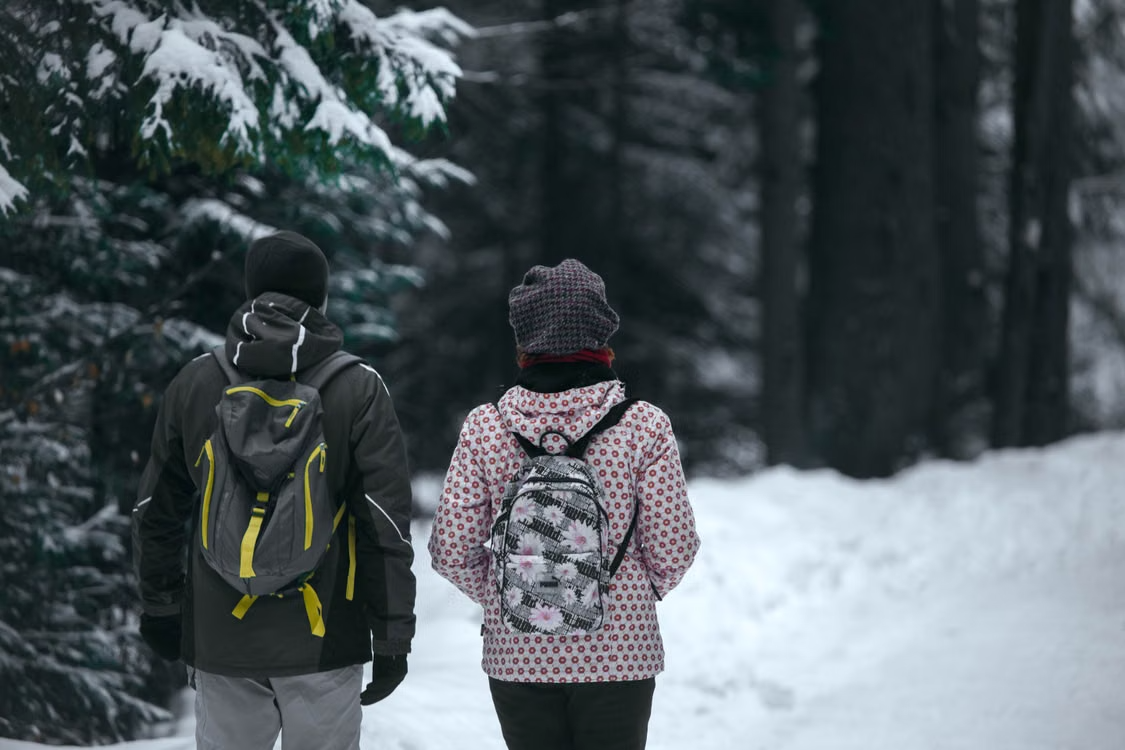
Image via Pexels
A Hat and Gloves
Okay, there was a slight lie at the start of this when it was mentioned that your feet are the first things to feel the cold on a hike; it’s actually your hands and head. It’ll take seconds for your hands and fingers to feel freezing when out on a hike, and this means you absolutely need to buy some gloves. Don’t bring any gloves with you; opt for hiking gloves, as they’re designed to do three important things:
- Keep your hands warm
- Keep your hands wet
- Keep your hands comfortable
At the same time, your body loses a lot of heat through your head, which is why it (and your ears) will feel the chill almost immediately. Again, the solution here is very straightforward: buy a hat to cover your head and lock in the heat. Without wanting to repeat myself, you should aim for hats that are designed for hiking instead of a standard woolly hat with a bobble on it. Hiking hats are made from better materials for thermal insulation, while also feeling a lot more comfortable.
A Neck Gaiter
A neck gaiter is basically a scarf without the length, and it sits around your neck to provide extra protection against the cold weather. Hikers wear them all the time, as you can cover your mouth and nose when it gets really cold – but they’re not as cumbersome or itchy as a more traditional scarf. You might feel a bit silly wearing one for the first time, but after an hour or so of walking in the cold weather, you’ll never want to take it off.
Dressing for the cold is always harder than dressing for hot weather when you’re on a hike. As difficult as it is to walk in the heat, you know that loose-fitted, breathable clothing is the main thing to bring – and it’s more about sun protection and staying hydrated than anything else. You can so easily get mixed up when putting an outfit together for a cold hike, so hopefully these five must-haves will put you on the right page.
